What it was
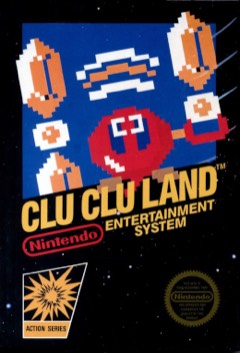
Bubbles, a balloonfish, swims through a maze of posts looking for gold ingots hidden under the floor. Pass over a hidden ingot and it appears; uncover them all to clear the stage. The ingots often form a heart or a mushroom. The catch is the steering. Bubbles swims straight and cannot simply turn. To change direction you grab a turning post and swing around it.
Sea urchins called Unira patrol the maze. A sound wave stuns them, and a stunned Unira can be pushed into a wall for points. Touch one, fall into a black hole, or run out of time and you lose a life. Later levels make the ingots flip each time you cross them, so you have to pass over an odd number of times to leave them showing.
Where it sits in history
Nintendo made it and released it on the Famicom in Japan in 1984, then in North America as one of the NES launch games in 1985, and in Europe in 1987. The name is an anglicised Kuru Kuru, Japanese for going around and around, which is exactly what Bubbles does. Bubbles was called Gloopy in Japan.
An arcade version, VS. Clu Clu Land, doubled the puzzles and added a Boss Unira. Its Famicom Disk System port, Welcome to New Clu Clu Land, was the last game Nintendo released for the Disk System. In June 1986 the Chicago Tribune picked Clu Clu Land and Ice Climber out of the NES library as the two games that kept holding their reviewers' interest after many plays.
Both the NES and Disk versions are unlockable in the first Animal Crossing. Hamster put it on Switch in its Arcade Archives line in 2018, and the NES game is on Nintendo Classics. Bubbles later got a playable role in DK: King of Swing, which borrows the grab-and-swing idea.
How it plays today
Awkward for five minutes, then clever. Your hands want Bubbles to turn when you press a direction, and she won't. Once you think in posts instead of corners, each maze becomes a route-planning puzzle played at speed, and the flipping ingots of the later levels are a proper test of memory.
It is short on variety. But nothing else on the NES moves like this, and that alone makes it worth a go.
Compared with
- Ice Climber: The other launch-era Nintendo game the Chicago Tribune said held up to replay.
- Pac-Man: Same maze-and-enemies frame, with much simpler steering.
- Balloon Fight: Another early Nintendo game built on one unusual way of moving.
Why it matters
Roger Caillois named a kind of play ilinx: play that comes from vertigo, from spinning until the world tips. Children spin on the spot for no reason except the feeling. Clu Clu Land takes that feeling and puts it in its name, Kuru Kuru, around and around.
Then it does what games do and gives the spinning rules. You may only turn by grabbing a post, and you have to plan where you let go. Caillois described play running from free play to rule-bound play; Clu Clu Land sits right between them, a game about the plain joy of swinging round, with a puzzle laid on top.
Read: The magic circle: the world that rules make →
- Caillois, R. (1958/1961). Man, Play and Games (trans. M. Barash).
What you're levelling up
You have been training these without noticing. Here is how to do it on purpose, and where it pays off away from the couch. All the skills games teach →
Spatial thinking
In the game. Bubbles can't just turn. You grab a turning post and swing around it, so once you think in posts instead of corners each maze becomes a route puzzle at speed.
Do it on purpose. Before a stage starts, trace your route post by post with your eyes. Then try to swim it without a single wasted swing.
Off the couch. Reading a new suburb, planning a drive with three stops, packing a ute. Seeing the route before you move saves heaps of time and looks effortless.
Memory and routing
In the game. Later levels flip the ingots each time you cross, so you have to pass an odd number of times to leave them showing. That's a proper memory test.
Do it on purpose. Keep a count out loud of every ingot you've crossed twice. See how far you get before you lose track.
Off the couch. Remembering the little things someone told you, their sister's name, the job interview they had on Tuesday, is a cheat code for being liked.
Bouncing back
In the game. It's awkward for five minutes because your hands want Bubbles to turn and she won't. Then it clicks.
Do it on purpose. Give it a full twenty minutes before you decide it's rubbish. Note the moment the controls stop fighting you.
Off the couch. New job, new sport, new city. Everything feels clumsy at first. Most people quit at minute five; the ones who stay get good.
Verdict · 6/10
A maze game that makes turning the hard part. Strange, then satisfying, and still unlike anything else on the system.