What it was
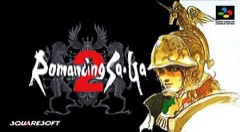
An RPG where the hero dies and the game carries on. You rule Avalon, an empire at war with the Seven Heroes, warriors who saved the world a thousand years ago and came back twisted by dark powers. Only the first and last rulers are fixed. Everyone in between is whoever you pick to wear the crown next, and when an emperor falls, the next one inherits their abilities and stats. The designers called this Inheritance.
Between dungeons you run the empire. Funds and territory pay for projects that improve weapons and gear. In battle your five-person party fights in a formation, and breaking it (by dashing into an enemy, or getting hit from behind) costs you its bonuses. There are no experience points. Skills grow from what you actually do with a weapon, and new techniques unlock by using it enough or by getting into particular situations, like parrying a hit. Characters also carry Life Points, and when those run out, they're gone for good.
Where it sits in history
Square had pulled most of the Romancing SaGa team onto Final Fantasy, which stalled the sequel. Series creator Akitoshi Kawazu was glad of it in the end. He would otherwise have had no time to rethink the mechanics, and the game would have felt too much like the first one. Production began in April 1992 and ran about a year with a staff of around twenty. Kawazu directed, designed and wrote it. Tomomi Kobayashi drew the cast and Kenji Ito composed the music, as before. A young Yasunori Mitsuda, not yet a composer, worked on the sound design.
Kawazu compared the Emperor's job to a company CEO, and his first pitch compared the management side to SimCity. The Seven Heroes were added late as a clear goal for the Inheritance system to be built around. Their names are a game of their own: in the Japanese versions the male heroes' names are anagrams of stations on Tokyo's Yamanote Line.
It came out on 10 December 1993, topped the Famitsu sales chart that month and sold nearly 1.5 million copies by March 2003, making it the best seller of the three Romancing SaGa games. It never left Japan on the Super Famicom. Square localisation staffer Ted Woolsey blamed a lack of manpower, and Kawazu blamed the unusual design and the sheer amount of text. English-speaking players had to wait until the 2016 remaster.
How it plays today
Reviewers of the remaster liked the systems and grumbled about the rest. Famitsu's reviewers found the original addictive once they understood how it worked, while Alana Hagues enjoyed the remaster's combat but criticised its lack of guidance and its difficulty spikes. The usual complaints are weak guidance, difficulty spikes and the lack of a conventional levelling system.
Go in knowing it won't hold your hand. Try the Inheritance system early, because it's the whole reason to play. If you want a gentler way in, the 2024 remake Revenge of the Seven shows the turn order on a timeline, adds a Casual difficulty, and lets an emperor step down instead of dying on the job.
Compared with
- Romancing SaGa: The 1992 original: eight heroes, one world, same no-levels idea.
- Romancing SaGa 3: The 1995 finale of the Super Famicom trilogy.
- Final Fantasy IV: Square's straight-line story of the era, the opposite of this free-roaming one.
Why it matters
In most games you are one person from the title screen to the credits. Here you're a line of people, and the game keeps asking what you hand to the next one. Games researcher James Paul Gee describes the player's identity in a game as a blend of the real self and the character, shaped by what the player wants that character to be.
When an emperor dies, you don't mourn for long, because you pick the heir who gets their strengths. It's a small, strange lesson in what a life is for: not to last, but to leave someone better placed than you were.
Read: Who you are when you play →
- Gee, J. P. (2003). What Video Games Have to Teach Us About Learning and Literacy.
What you're levelling up
You have been training these without noticing. Here is how to do it on purpose, and where it pays off away from the couch. All the skills games teach →
Planning ahead
In the game. Inheritance means today's emperor is building the next one's stats and abilities, so every choice about who fights and what they train feeds the line.
Do it on purpose. Before each dungeon, name who you'd want to inherit from this party and train them on purpose.
Off the couch. Setting up the next move, the next hire or the next season while things are calm is what stops the scramble later.
Systems thinking
In the game. There are no experience points. Skill points come from using weapons and abilities, and new techniques unlock through use or situations like parrying an attack.
Do it on purpose. Keep a party on one weapon type for a whole dungeon, then see what it taught them.
Off the couch. What you repeat is what you get better at, at the gym, at work and in a relationship.
Judging risk
In the game. Life Points run out and the character is permanently dead. Dashing into an enemy breaks your formation. You weigh a bold move against what it costs.
Do it on purpose. Pick one fight where you take the risky line on purpose and notice what you gave up.
Off the couch. Knowing which gamble is worth it saves money, mates and a few bad Saturday nights.
Verdict · 8/10
A strange, brilliant RPG about passing something on. Rough at the edges, impossible to forget.