What it was
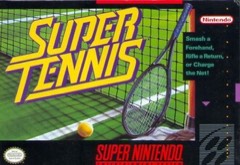
Tennis on the Super NES, its courts drawn in Mode 7. There are three modes. Singles puts you against a friend or a computer player. Doubles lets two people team up against the computer, or each take a computer partner and face each other, or lets one person and a computer partner take on two more. The World Circuit is the big one: a season of tours you choose your way through, earning ranking points and chasing number one.
The circuit has four minor and four major tournaments, modelled on real ones, played on three surfaces that each change how the ball bounces. The players are short, cartoon versions of the top professionals of the day, with their surnames left off, and each plays a little differently. Several buttons give you different shots, and the pad steers the ball and moves you about your half. The game never explains any of this. You learn by losing.
Where it sits in history
Tose developed it and Tonkin House published it in Japan on 30 August 1991; Nintendo localised it and released it in North America that November and in Europe the following April. It sold 27,930 copies in Japan, but critics loved it: Mean Machines called it the best tennis game available that October, and Computer and Video Games said much the same, especially against a friend.
That December, Siskel and Ebert ended a syndicated holiday video gift guide with it, and Gene Siskel called it his favourite video game. It was later picked for 1001 Video Games You Must Play Before You Die, and IGN ranked it 84th in its top 100 Super NES games.
How it plays today
Beautifully, once it clicks. The shots feel distinct, the surfaces genuinely change rallies, and two good players can trade points for minutes. The first hour is humbling, because nothing tells you what the buttons do; push through and it opens up.
Against the computer it is fine. Against a friend it is still one of the best tennis games ever made.
Compared with
- Tennis: Nintendo's 1984 NES game, for how far the sport came in seven years.
- Smash Tennis: Namco's Super NES tennis game, two years later.
- Jimmy Connors Tennis: A 1993 tennis game built around one real star, where this one blurs a whole tour.
Why it matters
You never play a real champion in Super Tennis. You play a short cartoon version of one, with the surname left off, and that gap matters. It is close enough to borrow the star's glamour and far enough away to be yours.
Gee calls this projective identity: the character you play is a blend of yourself and who you want them to be. A ten-year-old in 1991 could be a world number one for an afternoon, and so, it seems, could a film critic.
Read: Who you are when you play →
- Gee, J. P. (2003). What Video Games Have to Teach Us About Learning and Literacy.
What you're levelling up
You have been training these without noticing. Here is how to do it on purpose, and where it pays off away from the couch. All the skills games teach →
Problem solving
In the game. Several buttons give you different shots, the surfaces change the bounce, and the game never explains any of it. You learn by losing.
Do it on purpose. Spend one practice match testing a single button at a time on each surface. Write down what every shot does before you look anything up.
Off the couch. Working out a new job with no handover is the same problem. People who test and take notes, instead of waiting to be told, get trusted fast.
Reading people
In the game. Against a friend, two good players can trade points for minutes. Whoever spots the other's favourite shot first usually breaks the rally.
Do it on purpose. Play a mate and, for one set, track where they hit their returns. Next set, start standing where they like to aim.
Off the couch. Noticing what someone does without being told is what makes you good company. Your date mentions a band once and you remember it next time. That lands, and it isn't a trick.
Planning ahead
In the game. The World Circuit lets you pick your way through a season, four minor and four major tournaments, chasing ranking points to number one.
Do it on purpose. Before your next season, plan which tournaments you'll enter and which surfaces suit you. Check the plan against your ranking at the end.
Off the couch. Planning a year, where the money goes, which course to do, which trip to save for, beats drifting. People who have a plan and can bend it are rare.
Verdict · 8/10
A tennis game with real depth and no manners: it teaches nothing and rewards everything. Find a friend and a free afternoon.