What it was
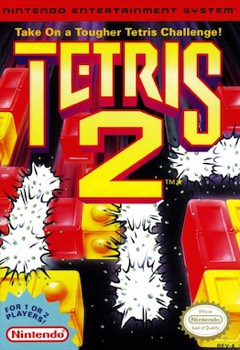
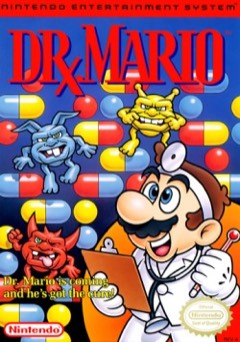
The pieces still fall from the top of the well, and they are still made of four squares. That is most of what Tetris 2 keeps from Tetris. Instead of filling a row from wall to wall, you match colours: line up three squares of the same colour with matching blocks already on the board and they vanish. If that sounds like Dr. Mario, it plays like it too.
The pieces themselves have changed. Some are not solid shapes at all; their squares touch only at the corners, making shapes no ordinary tetromino could. Planning a drop means thinking about colour and shape at once, which is harder than it sounds.
Where it sits in history
Tose developed Tetris 2 and Nintendo published it on the NES in 1993; in Japan it was called Tetris Flash. Versions for the Game Boy followed the same year and for the Super Nintendo in 1994.
It sold. In the United States it was the top-selling NES and Game Boy game in January 1994. In the United Kingdom it was the best-selling NES game for eight months of 1994, from March and then from May right through to November. Reviewers were cooler. Electronic Gaming Monthly's panel found the NES graphics poor and the game weaker than the original, and Game Players called it a disappointing attempt for puzzle fans who had waited patiently for a sequel. The Super NES version did better with critics, who liked its backgrounds and two-player mode, although Nintendo Power missed the Russian music of the first game.
How it plays today
As a puzzle it is fine. The corner-joined pieces are a genuinely odd idea, and there is a pleasant moment when you start to see them as tools rather than nuisances. But colour matching on the NES palette is not always easy on the eyes, and the game has none of Tetris's clean, ruthless clarity. You are never quite sure whether a mistake was yours.
The deeper problem is the name. Played as its own thing, a cousin of Dr. Mario, it is a decent way to spend half an hour. Played as the sequel to Tetris, it feels like a different game wearing a famous coat, and every minute reminds you of the one you would rather be playing.
Compared with
- Tetris: The game it is named after, and the one it cannot match for clarity or speed.
- Dr. Mario: The obvious relative: colour matching in a well, done more cleanly.
- Tetris Attack: Another Tetris in name only, but a far better puzzle game in its own right.
Why it matters
Tetris 2 topped the charts for months and still let the critics down. Schultz's work on dopamine helps explain that gap. Dopamine neurons signal the difference between what we expected and what we got, a reward prediction error; when the thing that arrives falls short of the thing we were waiting for, that signal dips.
The box promised the next Tetris. The game delivered a Dr. Mario cousin. Nothing inside was bad, but expectation had already set the bar, and the feeling that followed was disappointment. It is a good reminder that a name is a promise, and that we judge what we get against what we were told was coming.
Read: Wanting, not liking: what dopamine really does when you play →
- Schultz, W., Dayan, P., & Montague, P. R. (1997). A neural substrate of prediction and reward. Science, 275(5306), 1593-1599. doi:10.1126/science.275.5306.1593
What you're levelling up
You have been training these without noticing. Here is how to do it on purpose, and where it pays off away from the couch. All the skills games teach →
Problem solving
In the game. Some pieces aren't solid; their squares touch only at the corners. There's a moment where you stop seeing them as nuisances and start using them as tools.
Do it on purpose. Every time a corner-joined piece turns up, ask where it does the most good, not just where it fits. Count the clears you get from them.
Off the couch. The awkward job nobody wants is often the tool you needed. Spotting that makes you the one who sorts things out.
Planning ahead
In the game. Planning a drop means thinking about colour and shape at once: line up three of a colour with the blocks already on the board.
Do it on purpose. Before each drop, name the match you're setting up for the next piece, not this one.
Off the couch. Thinking one step past the obvious, the next bill, the next job, makes life less of a scramble. It also means you've got a plan for Saturday night when your date asks.
Spatial thinking
In the game. Shapes no ordinary tetromino could make, falling into a well you thought you understood.
Do it on purpose. Before you move each odd piece, picture both of its rotations in place. Note which ones you guessed right.
Off the couch. Picturing shapes is flat-pack furniture, packing the boot and reading a floor plan before you sign the lease.
Verdict · 5/10
A reasonable colour-matching puzzle with one clever idea, sold on a name it could not live up to. Play Dr. Mario or the original first.