What it was
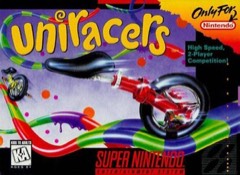
A 2D racing game about unicycles with nobody on them. Each uni rolls along a track of loops, corkscrews, twists and jumps, and the trick to winning is the tricks: launch into the air, spin around one axis or another, and land on the wheel. Stunts speed you up in races and score points on stunt tracks. Land badly and you wipe out and lose all your momentum.
There are nine tours of five tracks, 45 in all, and you earn bronze, silver and gold by beating computer racers. The track's coloured bars warn you of shortcuts and hazards ahead. The final tour pits you against the Anti-Uni, whose touch makes the track vanish and reverses your controls. A split-screen mode for two and a league for up to eight round it out, with 16 coloured unis each keeping its own save.
Where it sits in history
DMA Design built it for Nintendo under the working title '1x1', and the developers rode real unicycles around the office to learn how they move. It came out in North America on 5 December 1994 and in Europe, as Unirally, on 27 April 1995.
Its disappearance has a strange story. Developers Mike Dailly and Robbie Graham have said that Pixar sued DMA over the unicycle from its 1987 short Red's Dream, that DMA lost, and that Nintendo agreed to stop making cartridges after the first run of about 300,000. Yet no record of the lawsuit has been found, and the parties said to be involved later said they did not remember it. Either way, the game has never been re-released. DMA itself was later sold to Gremlin, then to Take-Two, and became part of Rockstar Games.
How it plays today
It is the most purely joyful racer on the console. Speed comes from showing off, so you are rewarded for being brave, and a clean double flip into a loop feels terrific. Critics in 1994 noticed the bare backgrounds and look-alike unis, and they were right: the world is plain, and the novelty fades over 45 tracks.
In short bursts, and with a second player, the plainness stops mattering. Learn which bars mean danger, start spinning earlier than feels safe, and play the stunt tracks to learn the moves.
Compared with
- Excitebike: The NES ancestor: side-on racing where how you land matters as much as how fast you go.
- Super Mario Kart: The SNES racer everyone owned, for when you want weapons instead of flips.
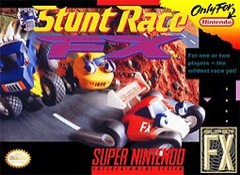
- Stunt Race FX: Nintendo's other odd SNES racer of 1994, heavy and slow where this is light and fast.
Why it matters
Uniracers is about flow in the plainest sense Csikszentmihalyi described: a clear goal, instant feedback, and a challenge that rises to meet your skill. Every flip is judged the moment you land it. Get it right and you are faster; get it wrong and you stop dead. After a while you are not deciding to spin, you are just spinning, and the race is over before you notice time passing.
It is also a reminder that games are fragile things. A whole studio's joy can vanish from shops for thirty years on a story nobody can now prove, and live on only in second-hand cartridges and the people who remember the loops.
Read: The zone: why good games make time disappear →
- Csikszentmihalyi, M. (1990). Flow: The Psychology of Optimal Experience.
What you're levelling up
You have been training these without noticing. Here is how to do it on purpose, and where it pays off away from the couch. All the skills games teach →
Judging risk
In the game. Stunts speed you up, but land badly and you wipe out and lose all your momentum. Bravery wins, right up until it doesn't.
Do it on purpose. Race one track pulling every trick you can, then the same track with none. Compare the times and find the sweet spot.
Off the couch. A bit of nerve, backing yourself, asking someone out, is attractive. Showing off with no landing isn't. Learn the difference.
Timing and rhythm
In the game. Launch, spin around one axis or another, and land on the wheel. Leave the spin too late and you're on your side.
Do it on purpose. Play the stunt tracks and start every spin a beat earlier than feels safe. Count your clean landings.
Off the couch. Starting a beat early is good advice for assignments, tough conversations and leaving for the airport.
Pattern recognition
In the game. The track's coloured bars warn you of shortcuts and hazards ahead. Learn the colours and the track reads itself.
Do it on purpose. On one tour, say what each bar means out loud as you pass it. Note any you got wrong.
Off the couch. Warning signs are everywhere: the mate who's always 'fine', the boss who goes quiet. Read them early and save heaps of grief.
Verdict · 8/10
A racer where tricks are speed and bravery wins. Thin on scenery, rich in feel, and lost to time since its one print run.