What it was
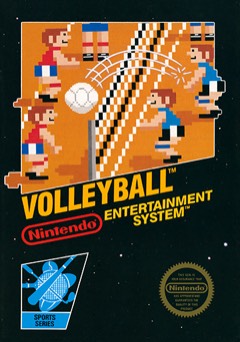
Six-a-side volleyball by the rules: three at the net, three behind. Choose men's or women's, and a team from the United States, Japan, China, Korea, Brazil, the Soviet Union, Cuba or Tunisia. Serve by pressing the same button twice, then try to keep track of the ball.
Where it sits in history
It came out on the Famicom Disk System in Japan in 1986 and on the NES in North America and Europe in 1987. It is a remake of Attack Four, a 1984 MSX game from Pax Softnica, mostly the work of a contract programmer, Hiroaki Hontani. A co-worker brought it to Nintendo, and Nintendo agreed to remake it in a rare co-development deal, with Hontani directing alongside Nintendo R&D4 and producer Shigeru Miyamoto.
Hontani went uncredited; the credit went to the company's president. Hontani then helped program Ice Hockey before leaving. Who owned Attack Four stayed in dispute for decades, until Habit Soft re-released it in Japan in 2024. Volleyball came to the Wii Virtual Console in 2007 and to Nintendo Classics in June 2018.
Reviews since have been harsh. AllGame gave it two out of five and could not tell which player was theirs, or where the ball was from its shadow. IGN called it Nintendo's worst sports game.
How it plays today
Badly. The idea is fine and the eight nations are a nice touch, but the same two problems AllGame named still sink it: which of your six is yours, and where exactly is the ball? Most rallies end in a guess.
Worth ten minutes as history: this is the partnership that went on to make Ice Hockey.
Compared with
Why it matters
Csikszentmihalyi found that absorption needs a clear goal and immediate feedback. Volleyball has the goal and loses the feedback: you press the button, something happens somewhere on the court, and you are not sure it was you.
That gap is why it frustrates more than it challenges. A hard game tells you what you did wrong. Volleyball leaves you unsure what you did at all, and no amount of trying can fix that.
Read: The zone: why good games make time disappear →
- Csikszentmihalyi, M. (1990). Flow: The Psychology of Optimal Experience.
What you're levelling up
You have been training these without noticing. Here is how to do it on purpose, and where it pays off away from the couch. All the skills games teach →
Teamwork
In the game. Six a side, three at the net and three behind, and half the battle is working out which of your six is yours.
Do it on purpose. For one set, track only the player you're controlling. Note how often you find them in time for the ball.
Off the couch. On any team, knowing your position and owning it is most of the job. Footy, work, a group assignment: whoever knows where to stand is gold.
Keeping your cool
In the game. Most rallies end in a guess about where the ball is, which tests your temper more than your hands.
Do it on purpose. Play ten minutes and breathe out before every serve after a lost point. Notice whether the guesses get any better.
Off the couch. Plenty of things are badly designed: forms, rosters, flat-pack instructions. Staying calm while you work them out makes you good to be around, on a road trip or a date.
Problem solving
In the game. Serve by pressing the same button twice, then work out where the ball actually is. The game doesn't help.
Do it on purpose. Spend a set hunting for one visual cue that tells you where the ball will land. Write it down and test it next set.
Off the couch. When a system's unclear, one reliable cue beats guessing. Same with a new boss or a tricky client.
Verdict · 3/10
A real sport made hard to see. Play it for the story behind it, not the rallies.