What it was
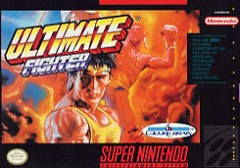
Pick Terry Bogard, his brother Andy or their mate Joe Higashi, then fight your way through Duck King, Richard Meyer, Michael Max and Tung Fu Rue before the bosses: Hwa Jai, Raiden, Billy Kane and, last of all, the crime boss Geese Howard. It's best two rounds out of three, a joystick and three buttons: punch, kick and throw. Special moves come from inputs, and the game shows you how to do them after each bonus round instead of leaving it to a card on the cabinet.
The big idea on the Neo Geo was two lanes. Fighters could step between the foreground and the background. The SNES version ditches that and gives you one plain lane, so it plays more like what everyone was already doing in Street Fighter II. The two-on-one team-up fights are gone too, and the arm-wrestling bonus rounds became a bonus round where you punch flying tyres. In Versus Mode the computer-controlled fighters are playable too, though only on the second player's side.
Where it sits in history
SNK's arcade original came out in 1991, designed by Takashi Nishiyama, who had made the first Street Fighter at Capcom. He wanted a fighter with a story and characters you could care for, and he treated it as his answer to Street Fighter II. SNK's Geese was drawn on Italian mafia, and the two last bosses took cues from The Godfather.
Takara made the SNES port. It hit Japan on 27 November 1992 and North America in April 1993. A Mega Drive version followed in 1993. Critics have split on it ever since. Computer and Video Games called the game one of the best Neo Geo titles available in 1992. Looking back in 1996, Maximum was less kind, calling the action slow and the fireball motions disgracefully difficult. In 2018 Complex went the other way and ranked the SNES game 74th on its list of the best Super Nintendo games, calling it 'one of the best fighters on the SNES, by far'.
How it plays today
It's slower than Street Fighter II, and the special moves need a deliberate hand. If you came to it expecting the Capcom rhythm, you'll feel like you're wading. Give it a few rounds and the pace starts to make sense: the bigger sprites, the heavier hits, the way a well-timed special feels like a decision instead of a flurry.
The two-lane trick is missed, since it was the thing that made Fatal Fury Fatal Fury. What's left is a sturdy one-on-one fighter with a mate on the other pad and a cast with plenty of character. Best with a friend who's willing to lose.
Compared with
- Street Fighter II: The World Warrior: The fighter Fatal Fury was built to answer, faster and combo-minded where this one is slow and deliberate.
- Art of Fighting: SNK's other early fighter. The two series share a continuity, with a younger Geese turning up in its sequel.
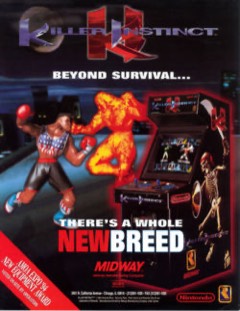
- Killer Instinct: Rare's 1995 Super NES fighter, built on long combo chains: the opposite of Fatal Fury's patient, one-at-a-time specials.
Why it matters
Juul writes about the odd bargain we make with games: we avoid failure in life, then go looking for it on a screen. When you lose to Geese, the game shows your fighter falling off Geese's tower. That's a harsh way to say 'try again'.
But it works because the stakes stay inside the game. We can lose badly, laugh about it and run it back. Failing in a space where it costs nothing is how we get a little braver at failing in the places where it does.
Read: The second controller →
- Juul, J. (2013). The Art of Failure: An Essay on the Pain of Playing Video Games. MIT Press.
What you're levelling up
You have been training these without noticing. Here is how to do it on purpose, and where it pays off away from the couch. All the skills games teach →
Timing and rhythm
In the game. Specials in Fatal Fury lean on timing more than combos. You pick the moment to throw a fireball or a dragon kick, not just the move.
Do it on purpose. Play one match using only one special, and make yourself wait for the exact gap before you use it.
Off the couch. The punchline, the ask, the awkward bit in a meeting. Same move, wrong moment, and it falls flat. Wait for the gap and it lands.
Reading people
In the game. Each challenger has a tell. Richard's kicks, Michael Max's Tornado Upper and Tung Fu Rue's transformation all give you something to watch.
Do it on purpose. Before your next fight, spend the first round only watching what your opponent likes to do.
Off the couch. Spend the first ten minutes of a date watching more than talking. You'll know how their day went before they tell you, and what to ask next.
Winning and losing well
In the game. Lose to Geese and your fighter falls off his tower. Beat him and it's Geese who goes over the edge.
Do it on purpose. After a loss, say one thing you'd do differently before you press start again.
Off the couch. Missing out on the job, losing the footy final, copping a knock-back. Say what you'd change, shake a hand, and you're the one people want back.
Verdict · 6/10
Slow, a little stiff, and short of what the arcade offered. Still a decent scrap with a friend, and a piece of the fighting boom.