What it was
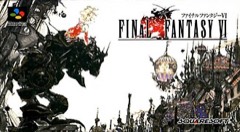
Final Fantasy VI has no single lead. It opens with Terra, a young woman with a slave crown and a gift for magic, marching Magitek armour through the snow, but within hours the story has spread across a thief, a king, a monk, a gambler, a feral boy, a disgraced general and more. Fourteen characters join for good, and the game gives nearly all of them a chapter of their own.
The setting is not the medieval fantasy of earlier games. Steam engines and factories share the world with a magic that the Gestahl Empire harvests from creatures called Espers. Battles run on the Active Time Battle system from Final Fantasy IV, and each character carries a signature skill: Locke steals, Celes absorbs spells. Magic comes from magicite, the crystallised remains of Espers; equip a shard and your character learns its spells over time and can summon the Esper in battle.
Halfway through, the world ends. The World of Balance becomes the World of Ruin, a scattered archipelago, and the second half lets you gather your party back in almost any order you like.
Where it sits in history
Square released it in Japan in 1994, and it was that year's best-selling game there. Hironobu Sakaguchi stepped back to produce, and for the first time the series had other directors: Yoshinori Kitase on story and events, Hiroyuki Ito on battles. Kitase wrote the opera scene and every one of Kefka's appearances. Tetsuya Nomura designed characters and monsters, Kazuko Shibuya drew the sprites and Nobuo Uematsu wrote the score. The whole team pitched characters and episodes, working from the idea that every character is the protagonist.
North America got it late in 1994 as Final Fantasy III, because Square had skipped two games in the West and kept its numbering in order. That translation, by Ted Woolsey, softened the violence and swearing to suit Nintendo of America's rules. It was the last main Final Fantasy on a Nintendo console for years; the next one moved to the PlayStation.
How it plays today
The story is the draw, and it lands. Kefka is a villain who actually wins, the opera house sequence is still charming, and the World of Ruin opening is one of the bleakest turns any 16-bit game took. The music carries every beat. The sprites are small but expressive enough to act scenes out.
As a game it is easy. Magicite lets you teach almost anyone the best spells, and by the second half most fights collapse under a few overpowered combinations. Some characters get far less attention than others, and a few late dungeons drag. It's a story you play through rather than a system you master, and that's fine.
Compared with
- Final Fantasy IV: Where IV follows one hero's redemption in a straight line, VI splits the spotlight fourteen ways and hands you the second half.
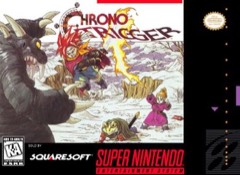
- Chrono Trigger: Square's other SNES giant is quicker, brighter and tighter; VI is longer, darker and messier, in a good way.
- Final Fantasy V: V has the deeper job system; VI trades it for characters and plot.
- EarthBound: The same year's other great SNES role-playing game, and its opposite in tone and setting.
Why it matters
Final Fantasy VI grew from one working idea: every character is the protagonist. Fourteen people join for good, and nearly all of them get a chapter. Then the world ends, and the second half asks who you want to go looking for first.
James Paul Gee describes a projective identity: a blend of the real self and the character, shaped by what the player wants that character to be. Final Fantasy VI spreads that blend across a whole cast. One player finds themselves in the gambler, another in the disgraced general, another in Terra and her slave crown. Donald Winnicott saw play as the space between inner and outer worlds where people are creative and find a self. The World of Ruin is that space in miniature. Scattered across an archipelago, with nobody telling you where to go, the order you rebuild your party becomes a small portrait of who you are and whom you miss. It matters that the game refuses a single hero. Most lives are ensemble pieces too.
Read: Who you are when you play →
- Gee, J. P. (2003). What Video Games Have to Teach Us About Learning and Literacy.
- Winnicott, D. W. (1971). Playing and Reality.
What you're levelling up
You have been training these without noticing. Here is how to do it on purpose, and where it pays off away from the couch. All the skills games teach →
Story sense
In the game. No single lead: Terra, a thief, a king, a monk, a gambler, a feral boy and a disgraced general, and nearly all get a chapter. Kefka is a villain who actually wins.
Do it on purpose. Read every line. After the opera house, tell a mate the story so far in two minutes, every main character included.
Off the couch. Most lives are ensemble pieces. Tell the story of the big weekend so everyone gets their moment and you're the one people want at the table.
Reading people
In the game. Fourteen characters join for good, each with their own reasons. Locke steals, Celes absorbs spells, and every one of them is carrying something.
Do it on purpose. When a new character joins, guess what they want before their chapter tells you. Check how close you got.
Off the couch. Everyone's carrying something. Ask a good question, actually listen to the answer, and you'll find out what. On a date that beats any line going.
Curiosity
In the game. Halfway through, the world ends. The World of Ruin is a scattered archipelago, and you gather your party back in almost any order you like.
Do it on purpose. In the World of Ruin, ignore the guide. Head somewhere you haven't been and see who you find, then write down the order you rebuilt the party.
Off the couch. Moving to a new city where you know nobody. Go exploring, say yes to the invite, and you'll have a crew again faster than you'd think.
Verdict · 10/10
The high point of 2D Final Fantasy, with a cast, a villain and a score that still hit hard. Easy to break, and still hard to put down.