What it was
Four guardians have taken over the citadel of the gods. The gods will grant a favour to any hero who wins it back, and the hero who steps up asks for a seat among them as an equal. The gods are only comforted by the hope that he fails. You play Hercules.
It's a platformer where precise, timed jumping is the whole job. Four levels, each ending in a Guardian. Between levels you meet a trader, and whatever wealth you've collected (jewels and bags) buys you better weapons and items. You can carry up to three of each weapon at once, and you can spread or tighten your aim: a tight angle for enemies on your level, a loose one when they're above you.
There are puzzles with levers and objects, and you only have four inventory slots, so you end up running back and forth through a level carrying keys. Little thieves pop out of walls to nick items you can't reach yet. Shoot them at the right moment and the item's yours. The enemies adapt too, to where you stand and how well you're playing.
Where it sits in history
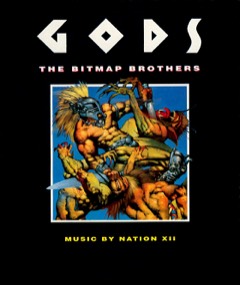
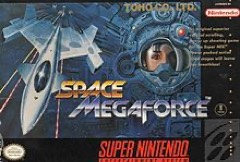
The Bitmap Brothers released Gods in 1991 on the Amiga and Atari ST, and it was ported to plenty of systems after that, including the Super Nintendo. Mindscape published the SNES version in North America in December 1992, with a PAL release the same year.
The cover art is by British comic artist Simon Bisley. As with other Bitmap Brothers games, an outside musician did the score: John Foxx, under the name Nation 12. The console versions don't share the PC opening theme, but they have music throughout. Computer Gaming World named it one of the top four action games of 1992.
The console versions run noticeably faster than the computer originals, especially on the Mega Drive/Genesis, which makes them harder.
How it plays today
This isn't a run-and-gun. If you rush, you bleed. The game rewards looking before you jump, and it's the planning that makes it feel different from the cheerful platformers sitting next to it on the shelf.
It's also oddly generous and mean in the same breath. It gives you bonuses for playing badly, and it takes your health for being hasty. If you want a slower, heavier platformer with a bit of puzzle in it, this is the one. If you want momentum, go elsewhere.
Compared with
- Super Castlevania IV: Another SNES action game built around deliberate, committed movement rather than speed.
- Flashback: A different kind of careful platformer, where timing and planning matter more than reflexes.
- Super Ghouls 'n Ghosts: Punishing in a different way: it hits you with enemies, where Gods hits you for rushing.
Why it matters
Gods starts with a small, odd bit of honesty: a hero asks for a seat among the gods, and the gods hope he fails. Then it spends four levels asking you to deserve it. There's no shortcut and no cheering section.
Juul's idea of the paradox of failure fits. We avoid failing in real life and seek it out in games, because each failure gives us something to fix. In Gods, haste costs you health, so the fix is always the same: slow down and look.
Read: One must imagine Mario happy →
- Juul, J. (2013). The Art of Failure: An Essay on the Pain of Playing Video Games. MIT Press.
What you're levelling up
You have been training these without noticing. Here is how to do it on purpose, and where it pays off away from the couch. All the skills games teach →
Planning ahead
In the game. Four inventory slots and keys scattered across a level mean you map the trip before you make it.
Do it on purpose. Before you enter each room, say out loud what you'll pick up, in which order, and where you'll drop it.
Off the couch. Four slots is a Saturday of errands with one car boot. Map the run before you leave and you're home by lunch instead of driving back across town for the thing you forgot.
Timing and rhythm
In the game. Jumps are precise and timed, and the item thieves only give up their loot if you shoot at the right moment.
Do it on purpose. Pick one thief room and don't fire until you're sure. Count how many shots you wasted.
Off the couch. Asking for the raise the week after a win, not the week after a stuff-up. Same ask, better moment, different answer.
Judging risk
In the game. You choose between a tight or loose weapon angle, and between rushing and taking the safe route at the cost of time.
Do it on purpose. Try one level only taking the safe route, then the fast one. Compare your health at the end.
Off the couch. The shortcut that skips reading the instructions, the email you send before checking the figures. Some save you an hour; some cost you a day. Look first.
Verdict · 7/10
A slow, thoughtful Hercules platformer that makes you earn every ledge. Worth it if you like to plan before you leap.