What it was
It is 2142. Conrad B. Hart, an intelligence agent, comes to in a jungle on Titan with no idea how he got there. His only clue is a recording he made himself, telling him to find his friend Ian in New Washington. Ian gives him his memory back, and with it the reason it was taken: Conrad built a visor that exposed an alien species, the Morphs, hidden inside human society, and the Morphs caught him.
It plays like Prince of Persia with a pistol. Each level is a stack of fixed screens on several heights, and Conrad moves like a real person: he runs at human speed, jumps human distances, grabs ledges, hauls himself up, rides lifts and dies if he drops too far. His gun never runs out, his shield soaks up a set number of shots before it needs recharging, and a portable force field gives him cover. Across seven levels the gunfights give way to spatial puzzles, and late on a teleporter you throw ahead of you opens places Conrad could never climb to.
Where it sits in history
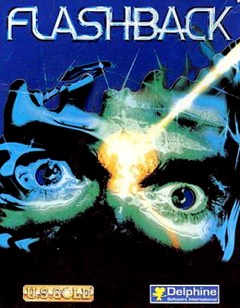
Paul Cuisset directed, wrote and designed the original for Delphine Software, and U.S. Gold published it on the Amiga in 1992. The fluid movement came from rotoscoping, with video traced onto transparencies first, laid over hand-drawn backdrops. The Super NES version, credited to Delphine and Tiertex Design Studios, came out through Sunsoft in Japan on 22 December 1993 and through U.S. Gold in North America in February 1994, subtitled The Quest for Identity.
Nintendo's content rules of the day left marks on it. The bar in New Washington became a cafe, the deathmatch called Death Tower became Cyber Tower, and the mutants were turned green. American copies came with a Marvel comic in the manual to set up the story; PAL copies used a written prologue. Electronic Gaming Monthly rated its graphics and music above the Genesis version, though Cuisset told Retro Gamer in 2013 that the Mega Drive version is his favourite, because the game was made for it. Across all versions, Guinness World Records lists Flashback as the best-selling French game of all time.
How it plays today
The animation still stops you. Conrad doesn't snap between poses; he shifts his weight, crouches, pulls himself up a ledge like it costs him something. Because a long fall really kills, every screen becomes a small problem of where to stand and when to move. The story is pulpy sci-fi paranoia, and it still pulls you from one screen to the next.
The controls are the catch, and reviewers said so at the time. Conrad commits to every action, so turning and drawing on an enemy take a beat longer than your thumbs want, and a firefight can feel like wrestling him. The save points draw grumbles too, especially after you replay a tricky stretch. Give it an hour to learn his rhythm and it clicks: deliberate, tense and unlike almost anything else on the console.
Compared with
- Another World: Delphine's cinematic platformer from 1991, and Flashback's closest relative.
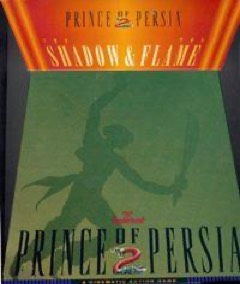
- Prince of Persia: The 1989 template: realistic movement, ledges and deadly falls, with a sword where Conrad has a pistol.
- Super Metroid: Another lone agent on a hostile alien world, built for roaming where Flashback is built for set pieces.
Why it matters
Flashback opens with a man who doesn't know who he is, listening to a message from himself. That is a strangely exact picture of starting any game. You pick up the controller knowing nothing about Conrad, and for the first stretch you are both working it out: what he can do, who he was, why he's in a jungle. James Paul Gee calls the result a projective identity, a blend of the real self and the character, shaped by what the player wants that character to be. With Conrad the blend is unusually even. He has no past to argue with, and when Ian hands his memory back, it lands for you and him at the same moment.
The American subtitle says it plainly: the quest for identity. Most of us know something of that, piecing ourselves back together after a hard stretch. Notice how Conrad manages it. He left a message for himself, and he gave a copy of who he was to a friend. Ian kept it safe until it was needed. Good mates do that for each other: hold on to who you are when you've lost track of it, and hand it back.
Read: Who you are when you play →
- Gee, J. P. (2003). What Video Games Have to Teach Us About Learning and Literacy.
What you're levelling up
You have been training these without noticing. Here is how to do it on purpose, and where it pays off away from the couch. All the skills games teach →
Problem solving
In the game. Each screen is a puzzle of ledges, lifts and drops, and late in the game you throw a teleporter to reach places Conrad can't climb.
Do it on purpose. On every new screen, stop before you move and plan the route out loud: which ledge, which lift, where the drop is safe.
Off the couch. Breaking a big job into the next three moves. Works on a tax return, a house move or a reno that's got you stumped.
Timing and rhythm
In the game. Conrad runs and jumps like a real person and dies if he falls too far, so a jump started a step late is a long way down.
Do it on purpose. Pick one nasty jump and land it ten times in a row, saying your cue out loud until your thumbs know it.
Off the couch. Timing matters at the dinner table too. Let your date finish the story before you jump in with yours. Good company knows when to talk and when to listen.
Story sense
In the game. Conrad wakes on Titan with no memory and a recording from himself. The plot comes back in pieces, from Ian's memory regenerator to the Morphs hiding among humans.
Do it on purpose. Keep a note of every clue about who Conrad was, and guess what the Morphs are after before the game tells you.
Off the couch. Following a long story without losing the thread: a mate's tangled work drama, a big meeting, a slow-burn TV series. People notice when you remember the details.
Verdict · 8/10
A handsome, tense sci-fi thriller that still feels like nothing else on the SNES. The deliberate controls take some learning, and then they become the point.