What it was
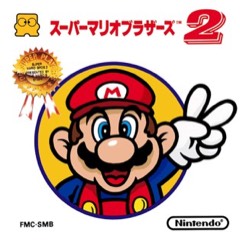
Same look, same sounds, same goal as Super Mario Bros.: run right, rescue the princess from Bowser. Then the first poison mushroom rolls towards you, a power-up that shrinks or kills you, and it is clear this is a different kind of game. Warp pipes can send you backwards. Gusts of wind push you mid-jump. Some jumps need blocks you cannot see, and others demand split-second timing.
There is no two-player mode, but you choose Mario or Luigi at the start, and for the first time they play differently. Luigi jumps higher and slides further, slow to speed up and slow to stop; Mario is quicker and more grounded. There are 32 levels across eight worlds, plus a hidden World 9 for players who never warp, and more bonus worlds for those who finish it eight times.
Where it sits in history
Nintendo R&D4 built it in about four months in early 1986, with Takashi Tezuka directing his first game while Shigeru Miyamoto was busy with The Legend of Zelda. Some of its levels began life in the arcade Vs. Super Mario Bros. Tezuka reasoned that Japanese players had mastered the first game and wanted something harder. The box said For Super Players, and TV ads showed people screaming at their screens.
It came out on the Famicom Disk System on 3 June 1986 and sold about 2.5 million copies, the system's best-seller. Nintendo of America's Howard Phillips judged it unfairly hard, so the West got a reworked Doki Doki Panic as its Super Mario Bros. 2 instead. This one first left Japan in 1993, renamed The Lost Levels, inside Super Mario All-Stars on the SNES.
How it plays today
If you know Super Mario Bros. well, it is a thrill. The designers clearly enjoyed turning your habits against you: the pipe you would always take, the jump you would always make, the block you would always hit. Luigi's floaty physics add a second way to play, and watching a skilled speedrunner get through it is a joy. It is a direct ancestor of the brutal fan-made Kaizo levels.
For everyone else it can feel mean. Invisible blocks, wind and poison mushrooms punish curiosity rather than skill, the physics are the same stiff ones from 1985, and later worlds demand trial and error. It is best seen as an expert's expansion to the original rather than a sequel in its own right. Play it with save states, or on All-Stars with its extra checkpoints, and it becomes a fun, fiendish puzzle.
Compared with
- Super Mario Bros.: The game this one extends and mocks; master that first, or this will not make sense.
- Super Mario Bros. 2: The Western sequel, a reworked Doki Doki Panic; kinder, stranger and barely a Mario game at heart.
- Super Mario Bros. 3: The true next step in design, with a map and suits; it keeps the challenge but earns it more fairly.
Why it matters
The box said For Super Players, and the TV ads showed people screaming at their screens. Nintendo sold this game on its own cruelty. The poison mushroom, the wind, the pipe that sends you backwards: Takashi Tezuka's team took everything players had learned in Super Mario Bros. and turned it into a trap.
Bernard Suits defined playing a game as 'the voluntary attempt to overcome unnecessary obstacles'. This is the voluntary part at full volume. Nobody had to buy a harder Mario. Jesper Juul adds the paradox: we avoid failing in life yet seek it out in games, and failure makes us reconsider and improve. Every death here is a small lesson about your own habits, delivered with a grin. Its descendants are the fan-made Kaizo levels, built by people who loved the pain enough to share it. A strange kind of generosity, and a very human one.
Read: One must imagine Mario happy →
- Suits, B. (1978). The Grasshopper: Games, Life and Utopia.
- Juul, J. (2013). The Art of Failure: An Essay on the Pain of Playing Video Games. MIT Press.
What you're levelling up
You have been training these without noticing. Here is how to do it on purpose, and where it pays off away from the couch. All the skills games teach →
Pattern recognition
In the game. The designers turn your habits against you: the pipe you'd always take, the jump you'd always make, the block you'd always hit.
Do it on purpose. When something kills you, ask what habit from the first game you were relying on. Then do the opposite.
Off the couch. Noticing your own bad habits, in arguments, with money or on dates, is the first step to stopping them.
Keeping your cool
In the game. Poison mushrooms, invisible blocks and wind gusts mid-jump. It feels mean, and the angry player keeps dying in the same spot.
Do it on purpose. After two deaths on the same jump, put the pad down for a breath. Come back and do it slower.
Off the couch. Not losing it when the world's being unfair is the skill. Traffic, a bad call at footy, a rough day at work.
Judging risk
In the game. Luigi jumps higher and slides further, Mario is quicker and more grounded. Picking one is picking which risks you want.
Do it on purpose. Play the same world as each brother. Note where Luigi's slide got you killed and where his height saved you.
Off the couch. Knowing your strengths, and choosing the risks that suit them, helps in career moves and big decisions.
Verdict · 7/10
A fiendish expert's sequel that is part tribute and part trap. Brilliant for Mario veterans; everyone else should play the original first.