What it was
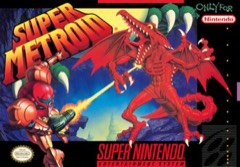
There is almost no talking in Super Metroid, and no one to help. Samus Aran lands on Zebes chasing the Space Pirate Ridley, who has stolen the last Metroid larva from the Ceres space colony, and the planet is left to explain itself through its rooms, its creatures and its music.
You explore one huge, connected map. Each power-up opens a path you already saw and could not take: the Morph Ball rolls through low gaps, bombs crack floors, the Grapple Beam swings across pits, the Speed Booster smashes through barriers, the X-ray Scope shows what is hidden. An automap tracks where you have been, and save stations sit around the planet. Samus can now aim in eight directions and wall-jump, and a fast finish earns a better ending.
Where it sits in history
Nintendo R&D1 made it with a staff of 15 under Gunpei Yokoi, with Yoshio Sakamoto writing and directing and Intelligent Systems programming. It took two years, after half a year waiting for approval, and it shipped on a 24-megabit cartridge: in Japan on 19 March 1994, North America on 18 April and Europe on 28 July. Kenji Yamamoto and Minako Hamano wrote the score.
It arrived late in the SNES's life and still topped the console's North American sales chart in May 1994, shipping 1.42 million copies by late 2003. Alongside Castlevania: Symphony of the Night it is credited with defining the Metroidvania, and its time-based endings and room for sequence breaking made it a speedrunning staple.
How it plays today
Almost perfectly. The atmosphere is the thing people remember, and it holds: the arrival on an empty planet, the music that swells or drops out as you move between areas, and the moments where the planet seems to be watching you. The map design is tight enough that getting lost feels like part of the plan rather than a failure.
The controls are the one real hurdle. Some reviewers found them awkward even in 1994: there are a lot of buttons to juggle, and wall-jumping takes practice most players never quite get. A couple of the hardest-to-find items need either luck or a guide. None of that stops it being one of the best games on the SNES.
Compared with
- Metroid: The NES original set up the idea; Super Metroid adds the map, the save stations and the atmosphere it needed.
- The Legend of Zelda: A Link to the Past: The other great SNES game of locked doors and new tools, overhead where Super Metroid is side-on.
- Mega Man X: Super Play's reviewers called Super Metroid what Mega Man X should have been. Mega Man X is faster and far more linear.
Why it matters
Early in Super Metroid you pass a ledge you cannot reach, a wall that looks slightly wrong, a gap too low to enter. You file them away without meaning to. Hours later the Grapple Beam or the Morph Ball arrives, and your mind is already walking back to that ledge.
Wolfram Schultz and colleagues found that dopamine neurons signal reward prediction error: the gap between what we expected and what we got. Kent Berridge and Terry Robinson argued dopamine is more about wanting than liking. Super Metroid is a machine for both. Every locked path sets up an expectation, and every new ability pays it off, sometimes with a room you never guessed was there. The wanting builds quietly, on a planet where nobody tells you what to want. That is what makes Zebes feel alive, and a little lonely. The planet never asks anything of you. You do the asking, and it answers in its own time.
Read: Wanting, not liking: what dopamine really does when you play →
- Schultz, W., Dayan, P., & Montague, P. R. (1997). A neural substrate of prediction and reward. Science, 275(5306), 1593-1599. doi:10.1126/science.275.5306.1593
- Berridge, K. C., & Robinson, T. E. (1998). What is the role of dopamine in reward: hedonic impact, reward learning, or incentive salience? Brain Research Reviews, 28(3), 309-369. doi:10.1016/S0165-0173(98)00019-8
What you're levelling up
You have been training these without noticing. Here is how to do it on purpose, and where it pays off away from the couch. All the skills games teach →
Spatial thinking
In the game. One huge connected map, and each power-up opens a path you already saw and couldn't take. You end up carrying the whole of Zebes in your head.
Do it on purpose. Play an hour without opening the map screen. Afterwards draw what you remember on paper and check it against the automap.
Off the couch. Knowing the way back to the car after a festival, or round a new city on holiday, makes you the one people follow. Quietly competent is a good look on a trip with someone you fancy.
Curiosity
In the game. The X-ray Scope shows what's hidden, and Zebes hides heaps: floors to bomb, walls to crack, a couple of items you'll only find by luck or a guide.
Do it on purpose. In every new room, test one wall or floor that looks too solid before moving on. Keep a tally of what turned out to be hollow.
Off the couch. The person who asks 'what's behind that?' at work is the one who finds the fix nobody else saw. Same habit finds you a better weekend.
Memory and routing
In the game. A fast finish earns a better ending, so the second run becomes a route you learn room by room.
Do it on purpose. Pick one stretch between two save stations. Write the route down from memory, then play it and mark where you went wrong.
Off the couch. Chunking a route is how you remember a speech, a recipe or five new names on your first day. Remembering names is a cheat code for being liked.
Verdict · 10/10
The best side-scrolling exploration game on the SNES, and the one most modern Metroidvanias still measure themselves against. Essential.