What it was
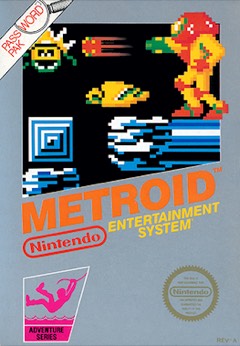
You land on the planet Zebes as Samus Aran, a bounty hunter sent to wipe out the Space Pirates and the jellyfish-like Metroids they stole. You start with a short-range beam and a jump. Everything else, from missiles to the Morph Ball that lets you roll through low tunnels, sits somewhere in a maze of shafts and corridors, and much of it hides behind walls you only think to bomb once you own bombs.
There are two bosses, Kraid and Ridley, and beating both opens the way to Mother Brain. Nothing tells you where they are. The game hands you a world, a few tools and silence, and trusts you to draw your own map.
Where it sits in history
Nintendo R&D1 made it with Intelligent Systems, under producer Gunpei Yokoi, with Satoru Okada and Masao Yamamoto directing. It came out on the Famicom Disk System in Japan in August 1986, reached the NES in North America in August 1987 and Europe in January 1988. The disk version had save slots; the cartridge had to make do with a 24-character password, which also gave the world the NARPAS SWORD cheat.
Two things carried it past its era. Upgrades stayed with you and opened old areas, an idea it shares with The Legend of Zelda and one that later shaped Castlevania. And the fastest finishers saw Samus without her armour, revealed as a woman, at a time when women in games were mostly waiting to be rescued. Those timed endings also made it an early speedrunning favourite. Hirokazu Tanaka's score, built on quiet and dread rather than tunes, did as much for the mood as the art.
How it plays today
The atmosphere survives intact. Zebes still feels lonely, and the moment the Morph Ball opens a passage you walked past ten minutes ago still lands. Samus controls cleanly and the jump has a pleasing float to it.
The rest needs patience. Many rooms look alike, there is no in-game map, and the early difficulty is steep enough that the first hour mostly teaches you how little you can take. Topping up energy means grinding the small enemies that drop it, which gets old. Keep a map from a guide handy or be ready to sketch one. A version with save states takes most of the sting out of the password system.
Compared with
- Super Metroid: The SNES sequel adds a map, saves and far richer design; play this first for the history, that one for the joy.
- The Legend of Zelda: The same year, the same idea of permanent tools opening a world, seen from above instead of the side.
- Castlevania II: Simon's Quest: Konami's attempt at a roaming, item-gated adventure, which leaves you even more lost than Zebes does.
Why it matters
For years, the person inside the orange suit was whoever held the controller. Samus says nothing and the helmet shows no face, so players filled the gap with themselves. Then the fastest finishers watched the armour come off and a woman step out, at a time when women in games mostly waited to be rescued. Plenty of kids had to rethink who they had been all along.
James Paul Gee calls this a projective identity: a blend of the real self and the character, shaped by what the player wants that character to be. Metroid leans on it harder than most, because Zebes gives you nothing else to lean on. No map, no guide, just silence and a few tools. Sherry Turkle wrote about computers as objects people think with and see themselves in, and a lonely maze you chart by hand is exactly that. The map you sketched on the back of an envelope was the part of Samus that was always you.
Read: Who you are when you play →
- Gee, J. P. (2003). What Video Games Have to Teach Us About Learning and Literacy.
- Turkle, S. (1984). The Second Self: Computers and the Human Spirit.
What you're levelling up
You have been training these without noticing. Here is how to do it on purpose, and where it pays off away from the couch. All the skills games teach →
Spatial thinking
In the game. There's no in-game map and many rooms look alike. You hold Zebes in your head, or you get lost.
Do it on purpose. Sketch the map on paper as you go. After each session, check it against where you actually are.
Off the couch. Finding your way around a new city or a new job without help makes you the one people follow. Handy on a weekend away with mates, too.
Curiosity
In the game. Much of your gear hides behind walls you only think to bomb once you own bombs. The Morph Ball opens a passage you walked past ten minutes ago.
Do it on purpose. Every time you get a new item, go back to one dead end and try it there. Note what opens.
Off the couch. Going back to an old idea with something new you've learned is how people solve problems at work. And asking your date about the thing they mentioned last week shows you were listening.
Bouncing back
In the game. The early difficulty is steep enough that the first hour mostly teaches you how little you can take.
Do it on purpose. Treat your first hour as scouting. Each death, note what hit you, then go again a bit smarter.
Off the couch. Starting anything new, a trade, a sport, a language, means being rubbish for a bit. The ones who stick it out get good.
Verdict · 8/10
A genre starts here, and the mood still grips. It asks for a map and a lot of patience, and it rewards both.