What it was
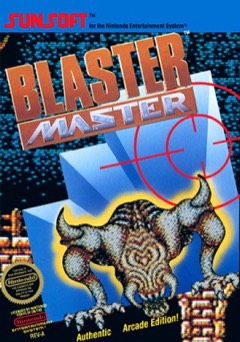
Jason's pet frog Fred touches a radioactive chest, grows enormous and vanishes down a hole in the back yard. Jason follows, finds a tank called Sophia the 3rd waiting in a cavern, and climbs in. It is a daft setup, and nobody playing it cared, because the tank is wonderful.
Sophia drives, jumps, fires up and sideways and, as you beat bosses, learns to hover, swim and climb walls and ceilings. Each new ability opens areas you drove past earlier, so the eight levels form one connected underworld you criss-cross. At any time Jason can hop out on foot and squeeze into small doorways, where the view switches to overhead and the game becomes a top-down shooter with bosses built big enough to fill the screen.
Where it sits in history
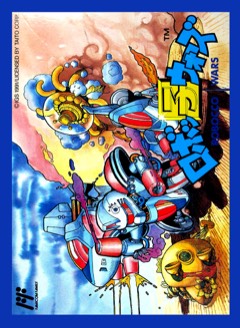
Sunsoft released it in Japan on 17 June 1988 as Metafight, with a planet-war story drawn from anime. It sold poorly there. For the NES release in North America that November, Sunsoft's American office asked for a new plot, so the planet's name went to the tank and Fred the frog was born. Europe got it in April 1991.
Kenji Sada led a small, part-time team of about five. He drew on Metroid for a world you could roam freely rather than a string of stages, and invented the switch between side-on tank and top-down foot soldier. Yoshiaki Iwata did the art and map, aiming for the best-looking NES game yet, and Naoki Kodaka's music is still one of the reasons people remember it. It did far better in the West than at home.
How it plays today
The tank sections are a delight. Sophia has weight and a springy jump, the backgrounds are rich for 1988, and the music drives every level along. The top-down rooms are a good change of pace until you meet a boss, where Jason's gun, which weakens every time you are hit, can leave you plinking away for minutes.
The big problem is that there are no passwords and no saves. A limited stock of continues is all you get for a long, difficult game, and dying deep in the late levels means starting over. Enemies respawn when you leave a screen, and a long fall can cost a life. Accept that it will take several attempts. The famous pause trick with a grenade, which melts four of the underbosses, is fair game.
Compared with
- Metroid: The direct inspiration. Blaster Master adds a vehicle and faster action, Metroid has the stronger atmosphere and passwords.
- The Legend of Zelda: The overhead rooms owe it plenty, and Nintendo Power said as much in 1993.
- Mega Man 2: Another NES game where beating bosses earns new abilities, but in stages you pick rather than one connected map.
Why it matters
A boy loses his frog down a hole in the back yard and follows it into another world. Nobody playing Blaster Master cared that this made no sense, and that is the point. It runs on the logic of a child's afternoon, where a garden turns into a cavern and a tank waits at the bottom.
Johan Huizinga described play as happening inside a magic circle, set apart from ordinary life with its own order. The American plot draws that circle literally: a hole in the ground, and beneath it rules that belong nowhere else. Donald Winnicott saw play as the space between the inner world and the outer one, where people get to be creative and find a self. Jason's underworld is that space, built from ordinary things, a pet and a yard, then grown enormous. Sunsoft's American office invented it to replace a planet-war plot. Somebody chose the back yard over outer space, and they were right.
Read: The magic circle: the world that rules make →
- Huizinga, J. (1938/1949). Homo Ludens: A Study of the Play-Element in Culture.
- Winnicott, D. W. (1971). Playing and Reality.
What you're levelling up
You have been training these without noticing. Here is how to do it on purpose, and where it pays off away from the couch. All the skills games teach →
Spatial thinking
In the game. Every new ability for Sophia, hover, swim, climb walls, opens areas you drove past earlier. The eight levels form one connected underworld you criss-cross.
Do it on purpose. Every time Sophia learns something, write down two places you remember it might open. Check if you were right.
Off the couch. Knowing your way around a new city without your phone is a quiet kind of cool. People follow whoever knows where they're going.
Bouncing back
In the game. No passwords, no saves, a few continues for a long, hard game. Die deep in the late levels and you start over.
Do it on purpose. Accept it'll take several runs. After each one, write down the furthest point and one thing that killed you.
Off the couch. Rejection's part of it, whether it's a job, a band audition or asking someone out. Treat each no as a run that taught you something.
Curiosity
In the game. Jason can hop out of the tank and squeeze into small doorways, where the view flips to top-down. Half the game's behind doors you'd ignore if you never got out.
Do it on purpose. Next session, get out of Sophia at every doorway you see, even ones that look like nothing.
Off the couch. Get out of the car, metaphorically. Ask the follow-up question, take the side street. Curious people end up with better stories to tell.
Verdict · 8/10
A brilliant tank, a sprawling map and a soundtrack to match, held back by brutal difficulty and no way to save. Worth it if you bring patience.