What it was
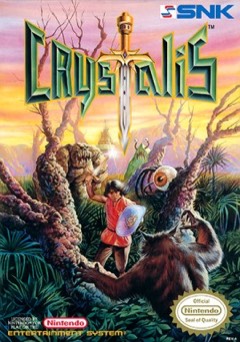
A man wakes in a cryogenic pod with no memory. It is 2097, a hundred years after nuclear war flattened the world, and the survivors have turned their backs on science for magic. A warlord named Draygon has done the opposite, mixing both, and wants into a floating Tower that could rule what is left. Four sages guide you, and a woman called Mesia, frozen in the same era, turns out to matter more than she first seems.
It plays as a top-down action RPG. You swing a sword, charge it up for elemental blasts, gain levels by fighting, and swap between four swords: wind, fire, water and thunder. Each opens a different kind of barrier, the water sword freezes bridges over rivers, and some enemies only fall to the right element. Magic and items sit on the second button.
Where it sits in history
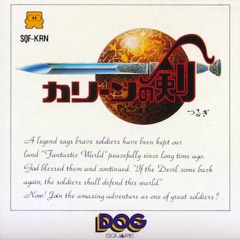
SNK developed and published it for the Famicom in Japan in April 1990 and brought it to North America that July. Its sci-fi fall-of-civilisation setting and art drew comparisons with Miyazaki's Nausicaä of the Valley of the Wind, and two of the sages are nods to SNK's own Psycho Soldier heroes, who later joined The King of Fighters.
Nintendo Software Technology remade it for the Game Boy Color in 2000, but that version rewrote the story, reordered the ending, replaced most of the music and shrank the view, and most critics liked it less. The NES original finally came back in 2018 inside the SNK 40th Anniversary Collection on Switch, and in 2019 on PlayStation 4, Xbox One and Steam, its first official release anywhere but a Nintendo system.
How it plays today
The good parts land straight away. It looks sharp for an NES game, the soundtrack is among the console's best, and the post-apocalyptic story still feels more ambitious than most of its peers. Charging a sword and blasting open a wall is satisfying, and the world has a steady sense of discovery.
The combat is where it thins out. Many fights come down to tapping one button quickly, and the hit detection is loose enough to cost you now and then. Some bosses can't be harmed until you reach a set level, so you sometimes grind before you are allowed to progress. None of it is fatal; it is a solid adventure that asks for a little patience.
Compared with
- The Legend of Zelda: The obvious ancestor, but Crystalis adds levels, a plot and a science-fiction twist Zelda never tried.
- Seiken Densetsu 3: A 16-bit action RPG with real-time fights and elemental magic, and far more depth to both.
- Metroid: Another NES game that locks parts of its world until the right tool opens them, here swords instead of beams.
Why it matters
Crystalis starts with a man waking in a pod, remembering nothing, in a world rebuilt around new rules. Magic instead of science. A wind sword for one barrier, a water sword to freeze a bridge over a river. It is a neat picture of what switching on any game does to us. Johan Huizinga, the Dutch historian, described play as a magic circle: a space set apart from ordinary life, free and bounded, with its own order. Inside it, freezing a river with a sword is simply how things work.
The apocalypse sharpens the point. Outside the circle, the old world ended in 1997. Inside it there are sages, a floating Tower and a clear next step. That is much of what games offer: less an escape from reality than a small, fair order you can understand and act on. When the ordinary world feels too big, the circle is somewhere to catch your breath.
Read: The magic circle: the world that rules make →
- Huizinga, J. (1938/1949). Homo Ludens: A Study of the Play-Element in Culture.
What you're levelling up
You have been training these without noticing. Here is how to do it on purpose, and where it pays off away from the couch. All the skills games teach →
Problem solving
In the game. Four swords, wind, fire, water and thunder, each open a different barrier. The water sword freezes bridges over rivers, and some enemies only fall to the right element.
Do it on purpose. When you hit a wall, list each sword and what it might do here before you try anything.
Off the couch. Using the right tool for the job: a calm talk, an email, a phone call. Knowing which works where saves heaps of grief at work.
Story sense
In the game. A man wakes in a cryogenic pod in 2097 with no memory, and Mesia matters more than she first seems. The story is ambitious for an NES game.
Do it on purpose. Read every line for one session. After, tell a mate the story in two minutes.
Off the couch. Telling a good story at the pub is a skill. People who can tell one well are fun to be around, and that's attractive.
Bouncing back
In the game. Some bosses can't be hurt until you reach a set level, so you grind before you're allowed to move on.
Do it on purpose. Treat grinding like training: set a goal, hit it, note how much easier the boss is.
Off the couch. Some things you can't skip: the boring reps at the gym, the junior job. Do the work and the next door opens.
Verdict · 8/10
One of the NES's best action RPGs, with a story and soundtrack well ahead of its time. The combat is simple, but the world carries it.