What it was
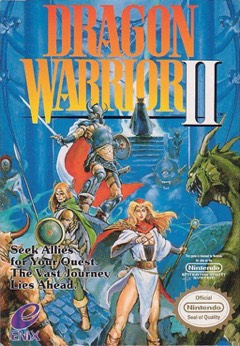
A hundred years after the first game, the wizard Hargon burns Moonbrooke Castle, and a wounded soldier staggers into Midenhall to tell the king before he dies. The king's son, a descendant of Erdrick, sets out alone. Along the way he finds his two cousins: the Prince of Cannock, who has set out on the same errand, and the Princess of Moonbrooke, whom Hargon has turned into a dog.
That party of three is the big change. Monsters now come in groups, and you give each hero an order every turn. Each carries their own eight items, so packing matters. Later you get a ship and can land anywhere, and the map opens wide, including Alefgard, where the first game took place. Collect five crests, make the Charm of Rubiss, and climb to Hargon's castle on the frozen plateau of Rhone.
Where it sits in history
Chunsoft made it for Enix, with the series' three founders back: Yuji Horii on the story, Akira Toriyama on the art and Koichi Sugiyama on the music. Koichi Nakamura directed and did half the programming. Planning began in April 1986, a month before the first Dragon Quest was even out. Nakamura had seen parties in Wizardry and wanted one here; the Famicom's sprite limits capped it at three. Toriyama painted full pictures of each monster, which other staff turned into pixels.
It shipped in Japan on 26 January 1987, a month late, held up by balancing and a crew that included students new to coding. Nakamura had written a program that simulated every fight to set the difficulty, but it did not account for large groups of monsters, and the late game stayed brutal. It still sold 2.4 million copies on the Famicom. Enix brought it to North America itself in 1990 as Dragon Warrior II, swapping the passwords for a battery save.
How it plays today
The first half is a pleasure: a small band gathering, a world getting bigger, a ship. The second half is where it earns its name. The Cave of Rhone is a long maze full of traps, and the last boss can heal itself completely. Expect to grind, and to lose.
It is easy to see why Nakamura later said he had done only half of what he wanted. The balance is rough and the menus are slow. But the ambition shows on every screen, and much of what later Dragon Quest games do starts here.
Compared with
- Dragon Warrior: One hero, one enemy at a time, a much smaller map; this sequel opened everything up.
- Dragon Warrior III: The prequel that perfected this formula with classes and a day and night cycle.
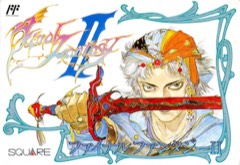
- Final Fantasy: Square's party RPG of the same era, released in Japan the same year.
Why it matters
Self-determination researchers found that games satisfy three needs: competence, autonomy and relatedness, and that this predicts enjoyment and the wish to play again. Dragon Warrior II is the moment the series added the third. The first game sent one person out alone. This one makes you go and find your family: a cousin on the road, another trapped as a dog, and only together can they finish it.
The game is too hard in places, but the shape of it is a good one. The hero who leaves alone comes home with company.
Read: The second controller →
- Ryan, R. M., Rigby, C. S., & Przybylski, A. (2006). The motivational pull of video games: A self-determination theory approach. Motivation and Emotion, 30(4), 344-360. doi:10.1007/s11031-006-9051-8
What you're levelling up
You have been training these without noticing. Here is how to do it on purpose, and where it pays off away from the couch. All the skills games teach →
Teamwork
In the game. Three heroes, monsters in groups, and an order for each hero every turn. You, the Prince of Cannock and the Princess of Moonbrooke only finish it together.
Do it on purpose. Each fight, give every hero a job before you pick commands: who hits, who heals, who mops up. Notice which turns go wrong when you skip it.
Off the couch. A share house, a footy side and a job are all three-player games. Know your role, cover theirs and don't blame the other player.
Planning ahead
In the game. Each hero carries their own eight items, so packing matters. Walk into the Cave of Rhone short on healing and you'll know about it.
Do it on purpose. Before Rhone, write down what each hero is carrying and why. Afterwards, note what you used and what was dead weight.
Off the couch. Packing for a weekend away with someone you're seeing, or a long drive. Think ahead and you're the one with the charger, the snacks and a plan when it rains.
Bouncing back
In the game. The late game is brutal. Rhone is a long maze full of traps and the last boss can heal itself completely. You will lose, probably a few times.
Do it on purpose. Count your wipes in Rhone. After each one, name one thing you'll change, then do exactly that on the next go.
Off the couch. The job knock-back, the bad season, the exam you flunked. Lose, learn one thing, go again. That's the whole trick.
Verdict · 6/10
A huge step for the series and a punishing one to play. Worth it for patient RPG fans; everyone else should start with a remake.