What it was
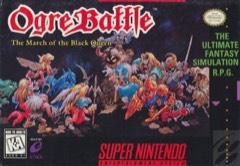
Twenty-five years ago, Endora, ruler of one of five kingdoms, conquered the other four with the help of the sorcerer Rashidi and crowned herself Empress. You lead the rebellion. Before the war starts, the seer Warren draws tarot cards and asks you questions, and your answers decide who your leader is: their strengths and their first troops.
Then the map opens. You build squads of up to five fighters, send them across the land in real time, and free towns and temples while the empire tries to take them back. Day turns to night; werewolves only wake after dark. When squads meet, the view drops into a short battle you don't control directly. You choose a tactic, such as hit the strongest or hit the leader, and you can play a tarot card. Every unit has an alignment, and the rebellion has a reputation. Free a town with a squad of cut-throats and the people remember.
Where it sits in history
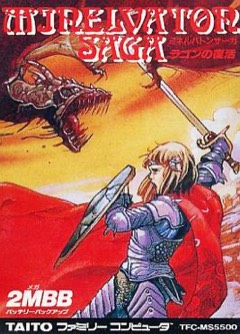
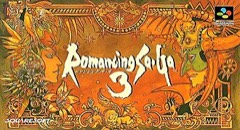
Quest Corporation released it in Japan on 12 March 1993. Yasumi Matsuno directed and designed it, with Akihiko Yoshida on art and Hitoshi Sakimoto, Masaharu Iwata and Hayato Matsuo on music; it was Sakimoto's first orchestral score. Matsuno pitched a real-time tactics game because few existed in Japan, and as a way to compete with Dragon Quest and Final Fantasy. The title comes from two songs by Queen, of which Matsuno was a fan.
Quest planned 200,000 copies, doubled it on Nintendo's encouragement, and sold all 400,000. Enix's American branch released it in May 1995 in a small run, reportedly 25,000, which sold out and made it a collector's item. Atlus later brought the PlayStation version west as Ogre Battle: Limited Edition in 1997, and its success led to the sequel, Tactics Ogre, getting an English release.
How it plays today
It is slow to learn and the battle view is small, complaints critics made in 1995 too. The first few hours are a lot of squad menus. Then it clicks: you start building squads for day and for night, for liberating and for killing, and the map becomes something you manage rather than survive.
The morality system is still unusual. Keeping a character good means fighting fair, against foes of their level or above, so the game rewards restraint over grinding. You can finish without seeing every stage, and the ending you get tells you who you were.
Compared with
Why it matters
Andrew Przybylski and colleagues found that games are most engaging when playing a character brings people closer to their ideal self. Ogre Battle starts by asking who that self is. The tarot questions come first, and the war that follows checks whether you meant your answers.
It would be easy to win ugly: send the strongest killers everywhere and let towns fall. The game lets you. It just hands you the country you deserve at the end, and in that quiet way it asks the question all the best games ask: when nobody is watching, how do you play?
Read: Who you are when you play →
- Przybylski, A. K., Weinstein, N., Murayama, K., Lynch, M. F., & Ryan, R. M. (2012). The ideal self at play: The appeal of video games that let you be all you can be. Psychological Science, 23(1), 69-76. doi:10.1177/0956797611418676
What you're levelling up
You have been training these without noticing. Here is how to do it on purpose, and where it pays off away from the couch. All the skills games teach →
Systems thinking
In the game. Day turns to night and werewolves only wake after dark. Alignment, reputation and squad makeup all push on each other across the map.
Do it on purpose. Build one squad for day and one for night, and send each out only in its time. Watch how your losses change.
Off the couch. Seeing how parts of a system affect each other, rosters at work, money in and out, makes you the one who fixes things.
Planning ahead
In the game. You build squads of up to five and send them across the map in real time while the empire tries to take towns back.
Do it on purpose. Before you move, decide which towns you'll guard and which you'll leave. Stick to it for one stage.
Off the couch. Deciding what you'll protect and what you'll let go is how good managers and good savers think.
Story sense
In the game. Free a town with a squad of cut-throats and the people remember. Keeping a character good means fighting fair, and the ending tells you who you were.
Do it on purpose. Play a stage fighting only foes your level or above. Notice how it feels to win the hard way.
Off the couch. How you win matters as much as whether you do. People, and anyone you're dating, notice whether you play fair.
Verdict · 8/10
A strange, deep war game that judges how you win as much as whether you win. Stick with the first hours.