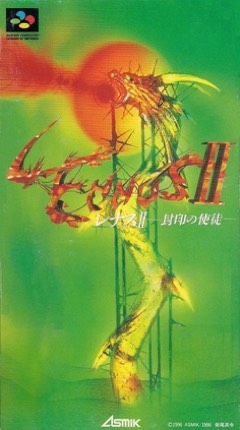
What it was
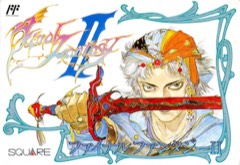
Get hit a lot and your hit points go up. Cast a lot of spells and your magic grows. Swing a sword and you get better with swords. Final Fantasy II has no experience levels at all; each character improves according to what they actually do in battle. It is a bold idea, and it is the reason people still argue about this game.
The story is a step up from the first game's. Firion and his friends survive an attack by the Palamecian Empire and join the rebellion against it, and allies come and go, some of them for good. A keyword system lets you memorise phrases in conversation and ask other people about them, which is how you learn where to go next. It also introduced two series fixtures: the chocobo and a character named Cid.
Where it sits in history
Square released it on the Famicom in Japan on 17 December 1988, almost a year to the day after the first Final Fantasy. Hironobu Sakaguchi directed, Akitoshi Kawazu designed the growth system, Kenji Terada wrote the script, Nasir Gebelli programmed, Yoshitaka Amano drew the art and Nobuo Uematsu wrote the music. Sakaguchi took the rebels-against-an-empire premise from The Empire Strikes Back, and Koichi Ishii designed the chocobo after a pet chicken.
Famicom Tsūshin scored it 35 out of 40, the Famicom release sold 800,000 copies, and an English NES version got as far as a prototype before Square cancelled it for the SNES era. English players first saw it on PlayStation in Final Fantasy Origins in 2003. The feedback on the growth system was bad enough that Final Fantasy III went back to levels, and Kawazu took his ideas to the SaGa series instead.
How it plays today
The story and the Word Memory system hold up better than you might expect for 1988; it feels like the series working out what a Final Fantasy plot could be. The music is lovely, and there is a real pleasure in watching a character's stats respond to how you play.
The growth system is where it falls down. It is easy to break, since characters can attack each other to raise hit points, and easy to get wrong, since stats can drift in useless directions. Many players end up grinding in odd, unnatural ways. The original has no English Famicom release, so an official English remaster is the sensible way in.
Compared with
- Final Fantasy: The first game has classes and levels; II replaced both and tells a much bigger story.
- Final Fantasy III: The next entry went straight back to levels and added jobs; it plays more smoothly.
- Dragon Warrior II: Enix's contemporary sequel sticks to experience and levels, the system II rejected.
Why it matters
Final Fantasy II has one simple rule: you become what you do. Swing a sword and you get better with swords. Take hits and your hit points rise. Cast spells and your magic grows. That is closer to life than most RPGs dared, and players broke it almost at once, turning on their own party to toughen each other up.
There is something very human in that. Richard Ryan, Scott Rigby and Andrew Przybylski found games satisfy needs for competence, autonomy and relatedness, and that this predicts enjoyment and wanting to play again. Final Fantasy II handed players a startling amount of autonomy, then failed to protect them from it. Stats drifted in useless directions and grinding turned odd, and the next game went back to levels. The idea survived: Akitoshi Kawazu carried it to SaGa. A character shaped by habits rather than a number is a lovely thought. Final Fantasy II just shows how fast we find the loophole when the rule is about who we are.
Read: Who you are when you play →
- Ryan, R. M., Rigby, C. S., & Przybylski, A. (2006). The motivational pull of video games: A self-determination theory approach. Motivation and Emotion, 30(4), 344-360. doi:10.1007/s11031-006-9051-8
What you're levelling up
You have been training these without noticing. Here is how to do it on purpose, and where it pays off away from the couch. All the skills games teach →
Systems thinking
In the game. No levels: take hits and HP rises, cast spells and magic grows, swing a sword and you get better with swords. Players broke it almost at once by attacking their own party.
Do it on purpose. Pick one character and decide what you want them to be. Play every fight to build that, then check their stats against the plan after an hour.
Off the couch. Life runs on the same rule: you get good at what you actually do, not what you say you'll do. Want to be fitter, funnier or better with money? Do the reps.
Memory and routing
In the game. The keyword system has you memorise phrases from conversations and ask other people about them. That's how you find out where to go next.
Do it on purpose. Keep a notebook of every keyword and who said it. Before you check the game's list, try to recall who to ask about what.
Off the couch. Remember what your date told you last week, their sister's name, the band they mentioned, then ask about it. That's the keyword system, and it works a treat.
Story sense
In the game. Firion and his friends join the rebellion against the Palamecian Empire, and allies come and go, some for good. It's the series working out what a plot could be.
Do it on purpose. Read every line, no mashing. When an ally leaves the party, stop and say why from their side.
Off the couch. Seeing why someone left a job, a team or a friendship from their side is the difference between a grudge and a fair go.
Verdict · 6/10
A fascinating, flawed experiment with a stronger story than its predecessor. Play a remaster, and play it for the history.