What it was
Cress Albane comes home to find his village burned and his parents dead. The trail leads to Dhaos, a sorcerer king sealed away years before, and the seal is broken in front of him. Nothing in Cress's time can hurt Dhaos, so an old hero sends Cress and the priestess Mint a hundred years into the past, to find magic and allies in an age when Dhaos was still at war.
Fights happen on a side-on battlefield wider than the screen. You control Cress directly, running and swinging in real time like a fighting game, while the rest of the party follow the orders you set or the spells you pick from a pause menu. It is called the Linear Motion Battle System, and every Tales game since has grown from it.
Where it sits in history
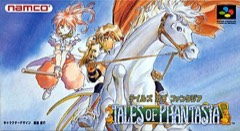
Wolf Team, a studio started by Telenet Japan, built the game from an unpublished novel by its lead programmer, Yoshiharu Gotanda. After Enix turned it down, Namco published it in Japan in December 1995, late in the Super Famicom's life. Voice clips and a sung theme, 'Yume wa Owaranai', needed a 48-megabit cartridge and a sound system called the Flexible Voice Drive. It is the only Super Famicom game with an original vocal theme song. Kōsuke Fujishima drew the characters; Motoi Sakuraba, Shinji Tamura and Ryota Furuya wrote the music.
Late in development many staff left Wolf Team and founded tri-Ace. Launch sales were slow, which the producer put down to Dragon Quest VI arriving at nearly the same time, and the cartridge sold 212,000 copies. A PlayStation remake in 1998 sold far more. English players waited until the Game Boy Advance version of 2006, though a fan translation of the Super Famicom game had circulated since 2001.
How it plays today
The battles still feel quick and physical, and hearing characters shout spell names out of a 1995 cartridge is a thrill. The story's turn at the end, when you learn why Dhaos does what he does, lands better than most RPG villains of its day.
It is also long and grindy, with frequent random fights between towns, and the original is in Japanese. The later versions smooth a lot of that out.
Compared with
- Chrono Trigger: Square's time-travel RPG from the same year, the one everyone in the West got to play.
- Star Ocean: The Super Famicom RPG from tri-Ace, the team that walked out of Wolf Team.
- Secret of Mana: Real-time combat on the same console, from above rather than side on.
Why it matters
Most villains of 1995 were evil because the plot needed a wall. Tales of Phantasia ends by telling you Dhaos came from a dying world and attacked yours to save his own. Your victory dooms his people, and only a tree spirit's gift of a seed gives his world a chance.
Erving Goffman wrote that a game builds a shared world with its own rules about what matters. For the whole adventure this one's rule is simple: Dhaos is the enemy. The ending quietly breaks its own rule, and you are left to decide whether the hero you played was right.
Read: The magic circle: the world that rules make →
- Goffman, E. (1961). Encounters: Two Studies in the Sociology of Interaction ('Fun in Games').
What you're levelling up
You have been training these without noticing. Here is how to do it on purpose, and where it pays off away from the couch. All the skills games teach →
Hand-eye coordination
In the game. You run and swing as Cress in real time, like a fighting game, on a battlefield wider than the screen.
Do it on purpose. Pick one enemy type and beat it without taking a hit. Slow down, watch it, then move.
Off the couch. Quick, accurate hands help in sport, in the kitchen and catching the glass before it hits the floor. Small physical competence reads as confidence.
Teamwork
In the game. The rest of the party follow the orders you set or the spells you pick from a pause menu. Set bad orders and they fight the wrong fight.
Do it on purpose. Before a tough fight, change one party order. Only one. Keep the change if it worked, undo it if it didn't.
Off the couch. Leading a group means clear instructions, then trusting people with them. Good bosses, good captains and the mate who organises the trip all do it.
Story sense
In the game. The turn at the end, when you learn why Dhaos does what he does, lands better than most villains of its day.
Do it on purpose. Before the final stretch, write down your guess at Dhaos's reason. See how close you got.
Off the couch. Working out why someone acts the way they do, a difficult boss, your new partner's dad at the first barbie, makes you calmer and kinder. People feel understood around you, and that's attractive.
Verdict · 8/10
The blueprint for a long-running series, and a technical showpiece for the Super Famicom. Easier to admire in the original than to finish in it.