What it was
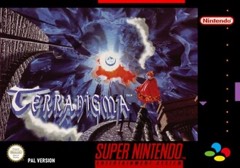
Ark lives in Crysta, the only village in a dark underworld, and he opens a door he was told to leave shut. Inside a box sits a small demon called Yomi, and everyone in the village freezes. To set it right, Ark climbs towers, raises the sunken continents of the surface world and then brings back, in order, plants, birds, animals and finally people. Terranigma's premise is the history of the world, rebuilt by one boy.
Once humans return, the game changes. You visit towns that grow and trade as you help them, and your choices spread inventions and ideas from place to place. Combat is real-time and top-down, with different moves for running, jumping and attacking, and a guard that blocks projectiles. Magic works like ammunition: stones called Magirocks are turned into rings and medals at shops, spent when cast, then returned to be turned into something new.
Where it sits in history
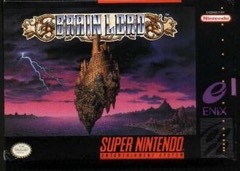
Quintet, the studio behind ActRaiser, Soul Blazer and Illusion of Gaia, made it for Enix, which published it in Japan on 20 October 1995 as Tenchi Sōzō, roughly the creation of heaven and earth. Director and designer Tomoyoshi Miyazaki, Quintet's founder, wrote the script, and manga artist Kamui Fujiwara designed the characters. Miyoko Takaoka and Masanori Hikichi wrote the music, with an uncredited track from Yuzo Koshiro.
Nintendo released it in Europe on 19 December 1996 and in Australia. North America never got it: Enix had closed its US branch before the English version was finished. It sold 200,000 copies in Japan. For three decades the rights were tangled, and a fan petition in 2021 drew attention to the problem. In August 2026 a re-release for modern consoles and PC was announced for 2027, the first official release in North America.
How it plays today
The first half is extraordinary. Watching a dead planet come back to life, continent by continent, is a strong hook, and the resurrection scenes are genuinely moving. Movement and combat feel quick and responsive, the dash-jump attacks give fights some flair, and the world map is full of places worth finding.
It gets harder and patchier later. Some bosses spike in difficulty, the town-building rewards are easy to miss without a guide, and a few late stretches send you wandering with little direction. The European English script is serviceable rather than sharp. None of that outweighs the ambition.
Compared with
- Illusion of Gaia: Quintet's previous game is more linear and closer to a guided tour; Terranigma adds shops, equipment and a world to shape.
- Soul Blazer: The first of the loose trilogy also has you restoring life to the world, one soul at a time rather than one continent.
- ActRaiser: Quintet's first SNES game also mixes action with building up a world, but splits them into two separate modes.
- Secret of Mana: A real-time action role-playing game on the same console, bigger and more social, less strange.
Why it matters
Terranigma asks you to bring life back in order: plants, then birds, then animals, and only then people. It's a creation story you play, and it makes a point most games skip. We were not the first creatures here, and we were not the first to play.
Jaak Panksepp and Jeff Burgdorf found rats make ultrasonic 'laughter' when tickled and seek out play: play and joy run deep in mammals. Johan Huizinga argued play is older than culture itself. Terranigma dramatises the same long view. By the time Ark brings humans back, animals already fill the world, and the towns that grow afterwards build their inventions on something far older. There's humility in that, and comfort. Playing isn't a modern habit or a childish one. It's among the oldest things living creatures do. Sit down with a game about raising a dead planet and you're joining something that started long before any of us.
Read: Older than us: play before people →
- Panksepp, J., & Burgdorf, J. (2003). 'Laughing' rats and the evolutionary antecedents of human joy? Physiology & Behavior, 79(3), 533-547. doi:10.1016/S0031-9384(03)00159-8
- Huizinga, J. (1938/1949). Homo Ludens: A Study of the Play-Element in Culture.
What you're levelling up
You have been training these without noticing. Here is how to do it on purpose, and where it pays off away from the couch. All the skills games teach →
Systems thinking
In the game. Once people return, towns grow and trade as you help them, and your choices spread inventions and ideas from place to place.
Do it on purpose. Help one town, then visit its neighbours. Note what changed elsewhere because of it.
Off the couch. Small changes ripple: one good habit at work, one generous move in a group of mates. Seeing the knock-on effects makes you good at fixing things, and good with money.
Curiosity
In the game. The world map is full of places worth finding, and the town-building rewards are easy to miss if you only follow the main path.
Do it on purpose. Go back to an area you've already cleared with no goal but poking around. Note anything you missed the first time.
Off the couch. Ask your date about the thing they're into and genuinely want to know. Curious people are the interesting ones.
Story sense
In the game. You raise continents, then bring back plants, birds, animals and finally people. The resurrection scenes are genuinely moving.
Do it on purpose. After a resurrection scene, tell someone in two minutes what happened and why it mattered. It's harder than it sounds.
Off the couch. Telling a story well, with a bit of feeling, gets a table listening. It's also how you write a cover letter someone reads to the end.
Verdict · 8/10
An ambitious, moving action adventure that never reached most of the world. Hard to find for now, and worth the effort.