Nostalgia
Why old games feel like home
Nostalgia has a bad reputation. The research says it is mostly warm, mostly about people, and good for us.
A few notes
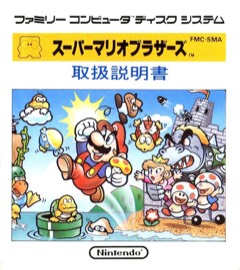
Somebody's phone plays the first few bars of the Super Mario Bros. theme, and a whole room comes back. The carpet. The cord that never quite reached the couch. The light through the curtains on a school holiday. Whoever was sitting next to you.
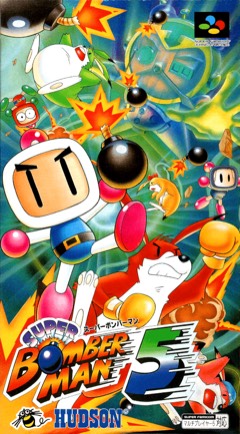
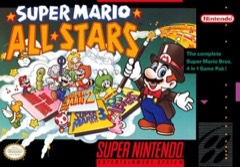
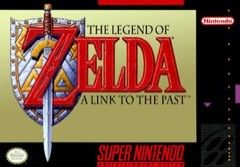
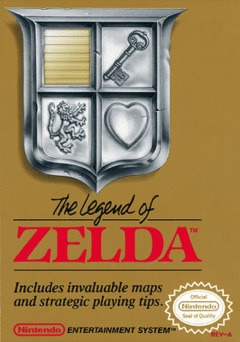
It is not only music. The chime of a secret in The Legend of Zelda can do it. So can the shape of a grey cartridge, the click of the NES tray going down, or the feel of a Super Nintendo controller in your hands, with its four coloured buttons in a diamond. The game comes back, and it brings a life with it.
Not a weakness
Nostalgia gets treated as a failure to move on, a soft spot for the past that should be kept private. The psychologists Tim Wildschut, Constantine Sedikides, Jamie Arndt and Clay Routledge decided to look closely at what nostalgia actually contains and what it does.
Their findings are kinder than the reputation. Nostalgia is mostly positive. It often features close others: family, friends, the people who mattered. And it raises two things that are good to have more of: a sense of social connection, and regard for yourself.
That matters, because most of us learned to be a little embarrassed by nostalgia. Collect old cartridges, or get misty at the Tetris music, and someone will call it living in the past. The research suggests something closer to the reverse: a feeling that, most of the time, points us back towards other people.
In other words, nostalgia is not mainly about the past. It is about people, and about who you were among them.
The people in the picture
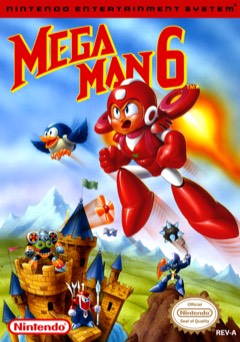
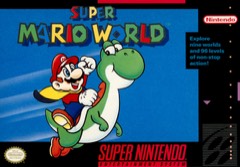
Try it. Think of an old game you loved, and notice how fast the memory fills with faces. The parent who tried Duck Hunt once, missed every duck, and was laughed at by the dog. The friend who wrote down the Metroid password on the back of a school notebook, one character at a time, and double-checked it aloud. The sibling who filled in the dot grid for Mega Man 2 while you called out positions. The cousin who owned Super Mario World, and the long wait until it was your turn.
Even the disasters are about people. A sibling who erased your Zelda save to make room for theirs. A Friday trip to the video shop, arguing in the aisle over which box to rent for the weekend. Blowing into a cartridge that would not start, a ritual everyone performed and nobody could explain. Those memories sting a little and warm a lot, which is exactly the mixture the research describes.
The games are the anchor. The people are what the anchor holds in place.
Who you were
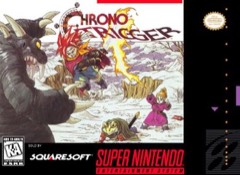
Wildschut and colleagues found nostalgia lifts regard for yourself, and old games are especially good at this. They remind you that you were once capable of remarkable things. You found the warp zone. You beat Mike Tyson's Punch-Out!! all the way through, or you knew someone who had, which was nearly as good. You finished Chrono Trigger over a summer and felt the ending belonged to you.
That younger self was patient, stubborn and curious. It learned the patterns, mapped the dungeons by hand and never gave up on a hard level for long. Remembering that person is not wallowing. It is checking in with someone who is still part of you, and who might have something to teach you.
There is a reason people pull an old console out of a cupboard in a hard year. It is not about hiding from the present. A few minutes with a game you once mastered can remind you that you have learned difficult things before, among people who cheered you on. By the research's account, that is exactly what nostalgia is good for.
Home is people
Old games feel like home because home was never really a place. It was the people in it, and the things you did together. A game you played with someone holds a little of them, the way a recipe holds a grandmother.
It works between strangers too. Hum the World 1-1 tune to someone of a certain age you have never met, and watch their face change. You were in different lounge rooms, in different towns, maybe on different continents, but you were doing the same thing at the same age, and you both know it. That shared memory is a small, real bond, and there are millions of them strung across the world. Nostalgia, done right, is not looking backwards. It is recognising that we were in this together all along.
Nostalgia travels well. With NES emulation in a browser tab, a cartridge you owned at eight can be on screen in the time it takes to remember the password.
Sources
- Wildschut, T., Sedikides, C., Arndt, J., & Routledge, C. (2006). Nostalgia: Content, triggers, functions. Journal of Personality and Social Psychology, 91(5), 975-993. doi:10.1037/0022-3514.91.5.975