Origins
Older than us: play before people
Long before the first cartridge, and long before the first people, animals were chasing, wrestling and, it turns out, laughing.

Before culture
The Famicom arrived in Japan in 1983. Play arrived a little earlier: somewhere back past the first people, among animals that tumbled over each other in the grass for no reason anyone could name.
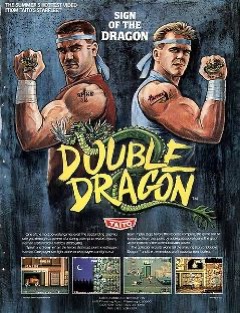
The historian Johan Huizinga opened his book Homo Ludens with exactly this point. Play, he argued, is older than culture. Animals did not wait for humans to teach them how. Watch two puppies play-fight, or a pair of young cats ambushing each other around a doorway, and you are seeing something that looks a great deal like two kids with a copy of Double Dragon. Rules, roles, pretend stakes, and obvious delight.
That changes how we ought to think about the games on this site. They are not a modern novelty that crept into human life with the television. They are the newest costume on one of the oldest things living creatures do.
The rats that laugh
The neuroscientists Jaak Panksepp and Jeffrey Burgdorf found something that sounds like a joke and is not. When rats are tickled, they make high-pitched ultrasonic calls, too high for human ears, which the researchers compared to laughter. The rats also sought out play. They came back for more.
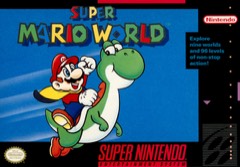
Panksepp and Burgdorf were careful, putting the word 'laughing' in inverted commas in their own title. But the point stands: play and joy run deep in mammals. The delight you felt landing a perfect jump in Super Mario World did not come from nowhere. It sits on very old foundations, shared with creatures who have never seen a screen.
There is something comforting in that. The part of you that still wants to play is not childish. It is ancient.
A head taller
The psychologist Lev Vygotsky studied how children grow. He saw that in play, a child acts a head taller than they really are. Play stretches people just past what they can already do. The child playing shopkeeper handles money and manners beyond their years. The child playing at being brave is, for a while, brave.
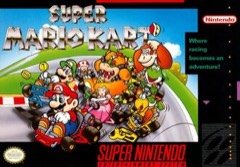
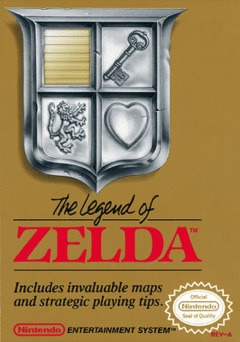
Games show this all the time. A seven-year-old who struggles with a page of homework will spend a weekend drawing a map of a Zelda dungeon, working out which rooms connect and where the key must be. A younger sibling who can barely hold the controller will somehow learn every shortcut in Super Mario Kart and start beating everyone in the house. Play reaches for the next rung of the ladder and, more often than not, grabs it.
This is also why a hard game suits a child so well. The game sets the next rung a little above where the player stands, and the child climbs because climbing is the fun. Nobody has to call it practice. In play, effort does not feel like a cost. It feels like the point, and that may be the oldest trick play knows.
Everyone, everywhere
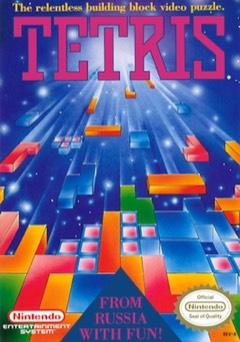
Tetris came out of Moscow and ended up in hands all over the world. The same Mario ran through World 1-1 in Japan, America, Europe and Australia, and nobody needed a translation to know the flagpole was the goal. A pit is a pit in every language. So is a high score.

And play has no age limit. Kids play. Teenagers play, though they may call it something else. Parents slip into Dr. Mario after the children have gone to bed. Grandparents who never touched a Nintendo play cards, bowls and crosswords with the same focus. Look at any culture, at any age, and you find people inventing rules, setting up obstacles, and overcoming them for the joy of it. The costumes change. The act does not.
Where we come from
We usually talk about play as something to grow out of, a stage before the serious business of life. The evidence points the other way. Play came first. It was here before us. The laughing rat, the play-fighting puppy, the child a head taller and the adult who stays up too late on one more game of Tetris all belong to the same long story.
That is the real reason this site exists. Not only to list the games, but to remember what they are for. We are alive. We play. We have always played, and we have almost always done it together. When you pick up a controller, you are joining in something older than language, older than cities, older than people. Welcome back.
The urge to play is nature. Which games you love is nurture: a child in Osaka grew up on Famicom cartridges, a child in Ohio on the NES, and neither chose. A recent cross-national study makes the same point about speech, finding that where you are born predicts the language you speak in 72 to 97 per cent of people across eight nations.
Sources
- Huizinga, J. (1938/1949). Homo Ludens: A Study of the Play-Element in Culture.
- Panksepp, J., & Burgdorf, J. (2003). 'Laughing' rats and the evolutionary antecedents of human joy? Physiology & Behavior, 79(3), 533-547. doi:10.1016/S0031-9384(03)00159-8
- Vygotsky, L. S. (1978). Mind in Society: The Development of Higher Psychological Processes.
- OMXUS Research Initiative (2026). Geographic birthplace as a predictor of primary language: A cross-national observational study. Preprint, not peer reviewed. press.omxus.com